Bhubaneswar: India’s transformation over the past 30 years, from a market opening to the world to an economy aspiring to achieve Viksit Bharat by 2047, has been shaped by companies that invested in its future. Samsung has been one of them, contributing to India’s manufacturing, employment, research, innovation and skilling ecosystem since entering the country in 1995.
Three decades later, the outcome is visible in factories supplying overseas markets, Indian engineers developing technology for global use and community programmes that Samsung says have reached more than 15 lakh people. Its investment has helped establish capabilities that extend from industrial production to preparing young people to create technology themselves.
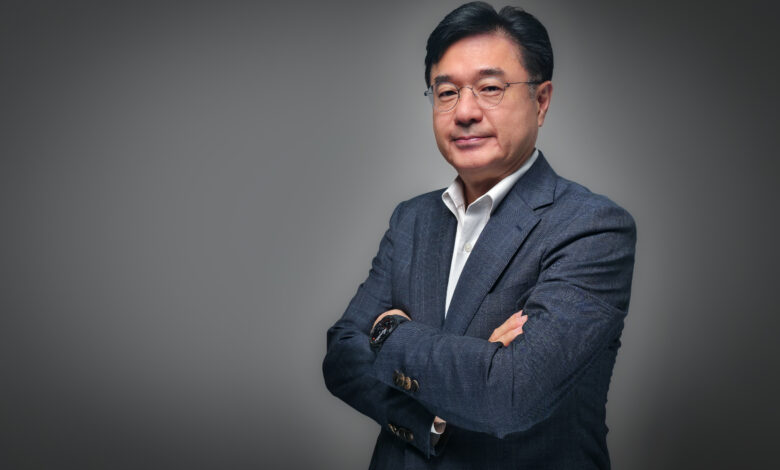
“Thirty years ago, many global companies came to India because they saw a large market. Samsung came because we saw something much bigger – we saw potential,” said JB Park, President & CEO, Samsung Southwest Asia.
The company has built manufacturing facilities in Noida and Chennai, along with three R&D centres at Samsung’s three R&D centres and a design centre and has filed more than 14,000 patents in India.
Manufacturing provided the foundation. Samsung’s Noida plant, one of the world’s largest smartphone manufacturing facilities, has grown into a major export hub. Together with its Chennai factory, it anchors the company’s production presence in India. Samsung is also looking to deepen its component footprint, potentially extending local activity further into the electronics supply chain.
The more consequential evolution has been in the work undertaken by Indian engineers. Samsung’s three R&D centres and design centre place research and design alongside manufacturing, giving its Indian operations a role in developing what the company sells worldwide.
Designing for 1.4 billion people with different languages, abilities and levels of digital familiarity tests on whether technology is intuitive and inclusive. Solutions developed around these needs can serve consumers elsewhere, making India’s diversity an asset in Samsung’s global innovation work.
Engineers in Bengaluru have worked on language models for Galaxy AI. Samsung’s Noida research centre has partnered with IIT Madras on AI for Indian languages, healthcare and generative AI, connecting corporate research with academic expertise.
“But more importantly, we evolved from bringing technology to India to creating technology with India,” he added.
Building the skills to sustain that transition extends beyond Samsung’s workforce. Under its vision of “Together for Tomorrow. Enabling People”, the company supports pathways from school education to technical training, workplace experience and youth innovation.
Samsung Innovation Campus has trained more than 26,500 young people in AI, Big Data, IoT and coding, including 20,000 last year, nearly half of them women, since its India launch in 2022. DOST’s expanded sales programme aims to train 13,000 youth from underserved communities, combining classroom instruction with five months of paid workplace training in retail stores.
At school level, DigiArivu brings STEM laboratories, digital learning and teacher development to 3,000 students across 10 government schools in Tamil Nadu’s Kancheepuram and Ranipet districts.
The clearest sign that AI is spreading beyond the metros comes from this year’s Samsung Solve for Tomorrow competition, which received applications from 648 cities and held 184 design-thinking workshops across 135 cities. More than half of its 20 finalist teams come from towns such as Sundargarh in Odisha, Chittoor in Andhra Pradesh and Raebareli in Uttar Pradesh, five are building solutions under an “AI Living for India” theme, and all are working with mentors at IIT Delhi and Samsung’s research centres ahead of an October finale that carries Rs 2 crore in incubation grants.
“For us, investing in people is not philanthropy. It is nation-building,” Park says.
That ambition takes practical form when young participants gain access to researchers, prototyping support and incubation. Across three decades, Samsung’s engagement has expanded from building its own operations in India to supporting capabilities in universities, schools and communities. The opportunities now include both contributing to a global technology company and acquiring the skills and support to develop ideas independently.